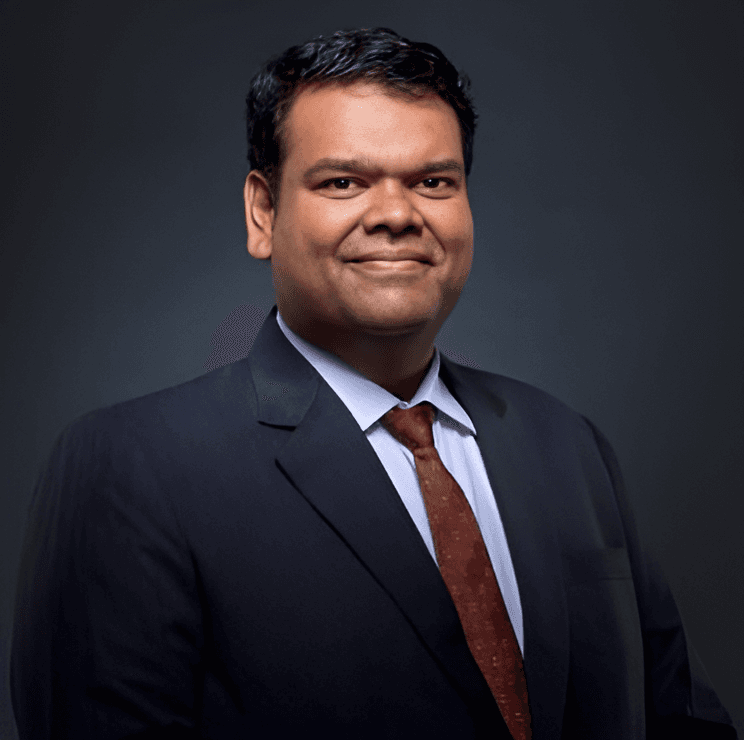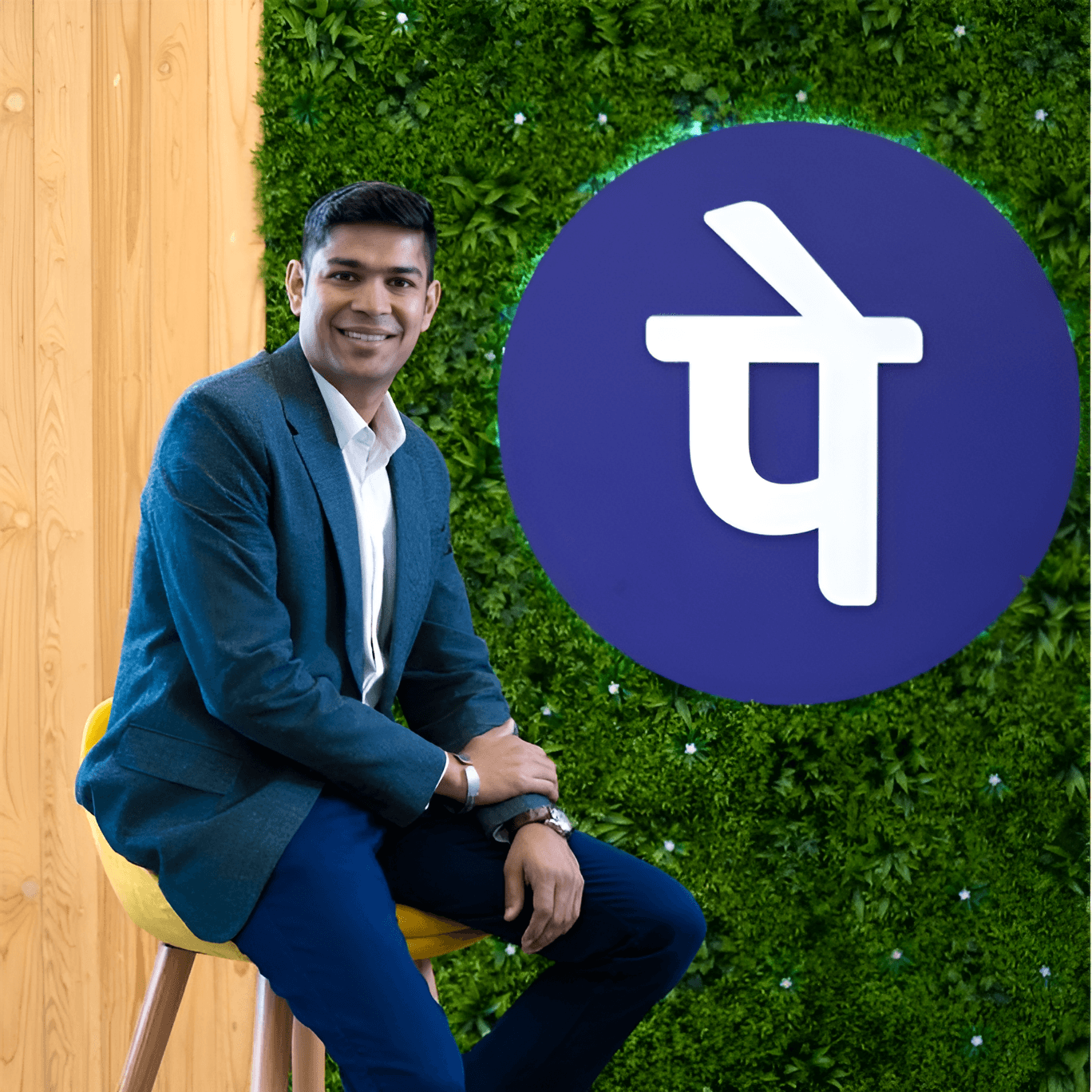
In conversation with Adarsh Nahata, Finance Head at
PhonePe. He started his career at ITC Ltd. as a Finance
Controller, and then worked his way up the corporate ladder at
Flipkart, becoming a Director there in 5 short years. He is
now the Vice President - Head Of Finance at PhonPe. We
would like to understand the role of the Head of Finance at
a fintech company from him and how to become one.
1. Describe your work and work profile in a very simple manner?
I head the finance function here at PhonePe
and there are 3 sub functions that I lead as
part of the finance org. These are :
Business Finance :
This works very closely
with the business development teams and
cost centres like marketing, IT and CS for
problem solving, targeting, strategic
planning keeping in view a long-term view
of what the category goals are and how
does it fit into the company’s vision/goals.
Corporate FP&A and Investor Relations :
Brings the entire org together in terms of
reporting, planning, target setting as well
as becoming a conduit for all internal and
external communication with the company leaders and investors. This function also aids
me in fund raising, deployment of funds, market research, keeping a pulse on
competition updates as well as competitive benchmarking.
Controllership :
This makes sure that company follows reporting and compliance
guidelines set by Companies Act, IGAAP (in our case USGAAP is also critical since we are a
subsidiary to Walmart), IFRS. So, controller org is something which makes sure we
operate and report back to different stakeholders and shareholders within the guard rails
set out for us. Besides this they also take of various controllership functions, Processes
and accounting operations, making sure there are no leakages in the system.
To summarise finance stands for, raising of capital and then deployment of funds in the
organisation thereby allowing the company to grow within the governance and execution
framework.
2. Can you share your Daily Routine with us?
My day starts generally going through my
inbox and going through reports on data
trends in various business verticals within the
company over the last few days. I follow that
up with regulatory updates/articles,
notifications about competition activities and
important trends/movements in the
ecosystem. This enables me to answer various
questions :
-
•
What is everyone doing: both internal and
external to PhonePe.
-
•
Can we identify an opportunity or a
threat?
-
•
What is our achievement against what we
set out to achieve?
-
•
Are there any problem statements which require immediate resolution?
-
•
Are there strategic or design level leakages in the system which require immediate
redressal?
Spending first couple of hours for keeping pulse of the daily KPIs at company level and
business vertical level as well staying on top of the email inbox, gives me a good head-start
for the day. I follow that up with review meetings. Then there are spikes (long sessions or
even full days) at the end of planning cycles (monthly and yearly), month end book closing,
investor communications or board meetings where I spend disproportionate time towards
these tracks.
3. How did you reach this stage in your career?
I believe surrounding yourself with
the right set of people has played a
very crucial role in leading me to where I am.
By this I mean both mentors and the team
which works for/with me. In Flipkart I got the
opportunity to work with people like Vaibhav
Gupta, co-founder at Udaan, a leading B2B
company in India right now; Kalyan
Krishnamurthy with whom I spent
considerable time working directly in his first -
FK- stint as CFO and as his Chief of Staff
during his CEO stint. Now I work with Sameer
Nigam the co-founder and CEO of PhonePe.
Each of these individuals were very different and I have learnt a lot from them.
Outside of that I have been blessed in terms of risks paying off at different points of time in
my career. I have worked with manufacturing firms like Sterlite and ITC, and it was at ITC
where the opportunity to work at Flipkart came along and I took the risk to move there.
Most of my peers and close network were against my decision to join a start-up which was
burning through cash and was not a conventional decision to make at that point of time
when start-up ecosystem had not yet matured in India. I joined Flipkart as a manager in 2012
and the risk has paid off. I have had 5 promotions in last 7 years, people generally don’t go
through that kind of journey. I have been rewarded consistently for the work I have done a
part of which stems from associating myself from the right people at the right time.
I have also ensured that I always have a superb team under me who I can lean on. So, I
would say it is a mix of both taking the risks, being fortunate enough for it to payoff and
surrounding myself with the right set of people at all levels.
4. What skills should a candidate possess if he wants to take up a profession similar to yours?
There are industry stalwarts and much more
experienced CFO/financial leaders who I think
are better equipped to answer this. Let me
nonetheless take a shot at what I believe has
worked for me till now.
Problem Solving :
Always thinking from
first principles and building scalable solutions
by design. Stakeholder Management /
Business Partnering: Building the right
relationships for executing and strategizing for
the benefit of the company is a must. One
never grows alone in a role or even as a
professional. Working holistically with cross
function involvement, building the right rapport is indispensable irrespective of the role one
is in. Fast Decision Making: Given the fast-growing sector I have been a part of decision
making is a critical element in the current era.
The speed of decision is more critical than the decision itself.
5. What are the Pros & Cons of your profession?
Pros :
-
•
Finance as an org is uniquely placed. It
gets a bird’s eye view of the entire org as well
as an in-depth view of any area they might
want to go deep in. You can make people /
teams accountable through data, establish
governance frameworks for people /
company to operate in, understand the
nuances of the business through planning
and reporting. Work closely and with the
business to problem solve org level
complexities and challenges. It keeps the
function and org excited.
-
•
At the same time a function like
controllership can add a lot more value in
terms of identifying opportunities and arresting leakages through Processes, analytics etc at
design level. They are a critical part to overall finance org because somethings still go
unnoticed whether you are talking about business finance or corporate FP&A.
Cons :
-
•
Resistance with one team or the other because of the governance framework you
introduce or the intent of joint problem solving is misplaced with Business team. Business
Teams generally love to stay independent and enjoy flexibility after budget allocation is
done from the finance team. They do not enjoy being challenged on the business calls or
their instincts.
-
•
On the contrary I have also had wonderful business partners who have worked so closely
with finance and me that they see the value that we could drive through data and lean on
us to operationally run the category. In terms of con this is the only thing which I have
solved for on a case to case basis instead of a design level solution which works seamlessly
agnostic of the Category leader in charge. Every time an org change is done I have had to
align stakeholders to what finance does, why they do it and how they do it. Sometimes it
takes more time for them to see the value add we do to the business. But once they see the
value add they adapt to it.
6. What is the best way to bag a job similar to yours?
I think two things make a difference.These are :
-
•
Experiment a lot and get a
width of different experiences.
What worked for me was that I moved
around of lot of profiles. I started as tax
consultant, working with the transfer
pricing teams, moved on to working in a
manufacturing org and spending time at
the plant location before moving to
divisional head-quarters. By the time I
moved to Flipkart I had already
experienced 5-7 different profiles. Even
within Flipkart I have not spent more than
1 to 1.5 years in a role. In fact, the stint at PhonePe has been my largest stint in the same
role in terms of the time I have spent. To bag a role like mine I believe it is important to
diversify your portfolio and learn about as many functions as you can. Work with
mentors who teach you how to manage an org, how to manage a team. That is another
very critical skill which people need to possess. As an example: During my stint as Chief of
Staff to Kalyan I worked very closely with technology and product teams where I learned
a lot. Again, in my last stint at Flipkart, I was doing Network Design for Supply chain
which is a very specialised profile. I was working with experts who possessed 20+ years’
experience on supply side. The only problem was they did not know anything about the
demand side. My job became very simple, to connect the demand and supply side. I
learned a lot in the implementation process.
-
•
Be passionate about what you do. If your heart is not in it your role then it is time to
move on. This advice might seem bookish or cliched to some, but this is what I believe in
and I have kept myself true to it. You can not simply succeed if you do not like what you
are doing. It is as simple as that.
7. What advice would you give to the freshers who are willing to
venture into this line?
I have been asked this question a lot. The
only advice I give freshers is to start with
whatever comes their way. The reason is
simple. Every job will give you an
opportunity to learn. Skip hop and jump
as and when new opportunity comes your
way. Thinking long term without knowing
or realising what the short-term role has
to offer is a shortcut. Explore various
possibilities as and when they present
themselves. Do not block your mind on
one path too early in your career. Try
different stuff, if you are not enjoying a
role then move on to something else. 1st
5 years don’t think if this is something you are supposed to do, don’t become territorial
and have high sense of ownership to whatever you do. Explore whatever you can. I
believe that gives you the exposure and experience to decide what you want to do in
the longer run.
In all the interviews in the initial 3-5 years, whenever I was asked to question.
what do you want to do in the long term I used to say, I want to
grow with a company and manage a large portfolio under me. I
kept it as generic as possible for the simple reason that I wanted to be honest in my
answer and that I did not know. I realised with time that this was true for most of the
people around me. No one knows for sure. Not only does this exploration allow you to
decide what you want to do but it also enables you with skills which shape you up and
enable you to excel at your job in the mid-term career.
This is only what I have done and seen around me as well. There might be different
playbooks and different experiences. For example, the CFO of Graphite who I worked
with. He worked for the same company for 35 years. He had the belief that working at
the same organisation gives you stronger depth and niche skills which helps you grow.
That could be track which someone might enjoy but one needs to be passionate about
the job at hand. If you find what you really and deeply care about and enjoy then you
should stick with it. No need to change just because I am suggesting you to.
Final Notes
“The views & opinions expressed in the article are that of the author. The blog contains the
opinions of the author and doesn’t reflect the opinions of any organizations with which the
author may be associated. The graphics are for illustrations purpose only we do not mean
to plagiarize anybody else’s content”