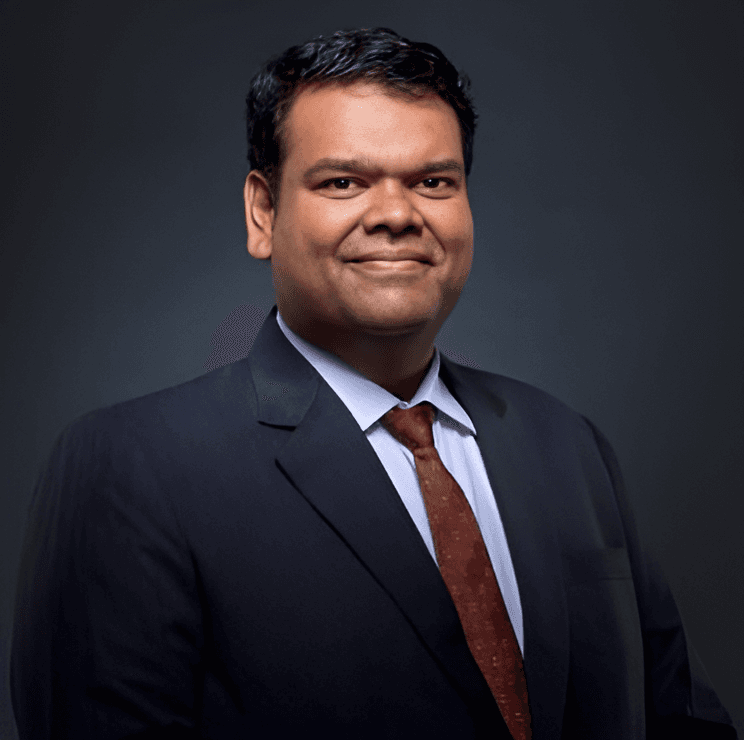
In conversation with Aditya Khemka, Fund Manager at DSP
Investment Managers Pvt Ltd. He started his career at
Glenmark in Corporate Finance division, and then worked at
Nomura and Ambit in the Equity Analysis domain for the
Pharma Sector, before becoming a Fund Manager. We
would like to understand the role of a Fund Manager from
him and How to become one.
1. Describe your work and work profile in a very simple manner?
Being a Fund manager at a Mutual Fund, we collect money
from individuals or companies and invest on their behalf. In
exchange for this service, we charge a small fraction of the
annual fee (~1% of the funds managed). This job involves
understanding the fundamentals of companies and valuing
them based on various financial aspects and projections.
Hence deciding, where to invest and how much to invest.
My job entails 3 aspects - Research, Fund management, and
Marketing. Research involves valuing the fundamentals of
companies, Fund management requires deploying funds and
buying stocks of the aforementioned companies. And,
marketing includes going on roadshows to portray our
product to the investors and convincing them to invest with us.
2. Can you share your Daily Routine with us?
My daily routine includes :
-
•
Waking up and reading the newspapers (online and
offline). I read global news of countries such as the US,
India, UK, and China.
-
•
Post reaching my office, I start working on my research
which includes speaking to the management of
companies and using their guidance along with my
judgment to build financial models.
-
•
Post valuation of companies, I deploy funds in their
stocks (if at all). Then I also speak to investors educating
them on our product and asking them to invest more
with us.
-
•
My job hours are really lengthy. A general day begins at 7am and ends at 7pm.
3. How did you reach this stage in your career?
I completed my CFA and MBA when I was 25 years. Then, I joined Glenmark Pharma in their
treasury dept. to see how corporate India takes financial decisions and engages in financial
management. Post this assignment, I joined Lehman Brothers (US), Nomura (Europe and
India) and Ambit Capital (India), after which I have been working with DSP Investment
Managers Pvt Ltd for nearly 4 years now. I have truly been fortunate to have a global exposure
while working in an industry that is global at its core.
4. What skills should a candidate possess if he wants to take up a profession similar to yours?
The asset management industry generally demands an
impressive educational background. While a CFA is a must,
an MBA from an A-league B school in Finance helps
immensely.
A sound understanding of numbers and models is also
crucial, however, logical reasoning and data analysis are
supreme. You must remember that there is no space for
emotions in this world as you deal with a lot of money that
doesn't belong to you. Similarly, there is no space for greed
or fear. All decisions in this industry are based on facts,
expectations and solid evidence-based analysis.
So basically, the candidate should exhibit a rational mind that can distil facts and opinions and
can see through emotions. We have many great friends who are owners of companies that
we have never invested in and probably will never invest in. We have invested in many stocks
where we don't even know the promoter very well, but we believe the business model is
extremely concrete and can yield major returns as it keeps growing.
5. What are the Pros & Cons of your profession?
As I mentioned earlier, this profession involves long working
hours and requires a huge amount of diligence. Hence, I
wouldn't really identify it as "exciting".
Investing is like watching grass grow, it is uneventful. But the
real joy lies in seeing the grass become a bush overtime. Just
like the grass, investing needs loads of patience and constant
self-check. This can be very repetitive and boring on
occasions. The daily routine is similarly repetitive many times.
However, for me, the good part of the job is the pleasure we
get once the investor sees his hard-earned earnings
compound over time and which helps them to grow their wealth.
Excel sheets and newspapers can be boring or exciting, it all depends
on the mind-set of the individual.
The same lies with traveling, which is also a huge part of my job (to meet companies and
investors).
6. What is the best way to bag a job similar to yours?
First, get a degree from an institution from where you can get interviews with these asset
managers or institutional brokers.
You will have to start somewhere at the bottom and work your way
up to the high ranks.
7. What advice would you give to the freshers who are willing to
venture into this line?
Study hard and make maths and analysis a part of your every
minute thought process. Ask questions we don't think about and
are unaware of. Read a bunch of books on investing. Be prepared
to face mental and emotional stress, which is a part of the package.
Final Notes
“The views & opinions expressed in the article are that of the author. The blog contains the
opinions of the author and doesn’t reflect the opinions of any organizations with which the
author may be associated. The graphics are for illustrations purpose only we do not mean
to plagiarize anybody else’s content”